Implementation-led business advisory
Start with the business reality. Then do the right work in the right order.
I do not begin with a fixed programme or assume the first visible problem is the real one. I begin by understanding the business, the outcome required and the issues or opportunities that matter most.
From there, the work is structured through one of two pathways and tailored to the client's priorities, capability and pace.
Strategic width · 3200mm
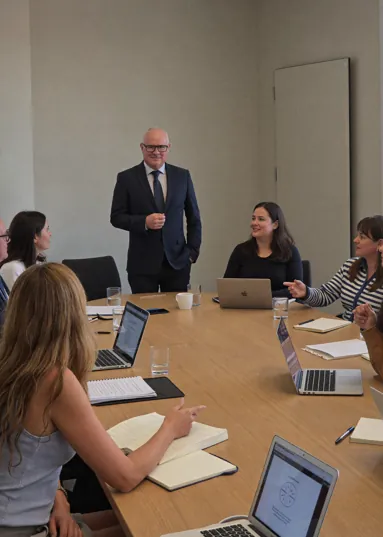
Senior Advisor
Richard Jessep
Six practical steps
The advisory process.
Disciplined and designed. Depth, pace and people involved are adjusted to the business, but every engagement follows the same underlying logic.
Initial business conversation
Understand what prompted contact, what is happening inside the business, the outcome required and whether there is a sensible fit.
Business Reality Assessment
Assess the relevant commercial, leadership, financial, operational, system and future-readiness factors. The depth depends on the engagement.
Select the right pathway
Confirm whether the need is whole-of-business, specialist and focused, or centred on exit and succession.
DEFINE AND BUILD THE PLAN
Develop the strategy, build the plan and agree the priorities, intended outcomes, people involved and short-term activity.
Implement and build capability
Turn decisions into actions, tools, management rhythm, coaching and measurable progress inside the business.
Review and adapt
Review performance, decisions and changing conditions. Complete work, re-prioritise where required and keep accountability visible.
Step Up · Step Back · Step Out
The three pathways within the STEP framework.
The framework provides a clear way to understand the advisory ecosystem. It does not force every client through three consecutive stages. The engagement starts where the business need is real.
Tailored in five ways
THE WORK IS TAILORED TO YOUR BUSINESS, NOT THE OTHER WAY AROUND.
The framework is consistent, but every application is different. These five dimensions shape how the work is scoped and delivered.
The business context
No two businesses are identical. The work starts with the specific situation, history, pressures, and the real outcomes the owner wants to see.
The capability gap
Some clients need strategy and direction; others need hands-on implementation. The depth of advisory and support is adjusted to where the business actually is.
The people involved
The right people are brought in at the right time, whether that is the owner alone, the leadership team, key managers, or external specialists.
The pace and cadence
Some engagements are intensive, others spread over months or years. The rhythm is set by the business's capacity, urgency, and implementation cycle.
The commercial outcome
Every programme is scoped around a clear commercial result: stronger performance, deeper capability, or a better-positioned exit, not just a finished report.
Alongside, not instead of
Working with your existing specialists.
Accountants, lawyers, marketing agencies, technology providers, HR specialists, brokers and financiers all have important roles. My role is to help the business make the right decisions, connect the work and keep the overall outcome visible.
I do not need to replace good providers. I often help clients get more value from them by improving the strategy, brief, priorities and accountability around their work.
Supported by BSP Advisory Group
Richard delivers his advisory programmes through BSP Advisory Group, combining a direct personal working relationship with the tools, resources and professional infrastructure of an established New Zealand advisory group.
Clients work directly with Richard. He remains responsible for understanding the business, shaping the programme and supporting implementation. BSP provides wider programme resources, tools and professional infrastructure.
View Richard's BSP Advisory Group profileWHAT YOU CAN EXPECT FROM ME
Direct, commercially grounded advice
Clear diagnosis before recommendation
Honest challenge and independent judgement
Practical plans and clear next steps
Ongoing support and accountability
Confidential, jargon-free advice
WHAT I EXPECT FROM CLIENTS
Honest information and open access
Willingness to address difficult issues
Ownership of agreed actions
Consistent participation and follow-through
Openness to challenge and change
Commitment to implementation
Schedule 08: Frequently Asked
Frequently asked questions
Practical answers about engagements, cadence and how the work runs.
Direct responses to the questions owners, directors and senior managers most often raise before the first conversation.
Schedule 08: Frequently Asked
Government co-funding
The Regional Business Partner pathway, explained.
Eligible companies with less than 50 fulltime employees may be able to reduce part of the initial advisory investment through the Management Capability Development Fund. Here is how it works.
Begin here
A two-way engagement.
Start with a practical conversation about the business, the issue or opportunity, and the most useful pathway forward.